


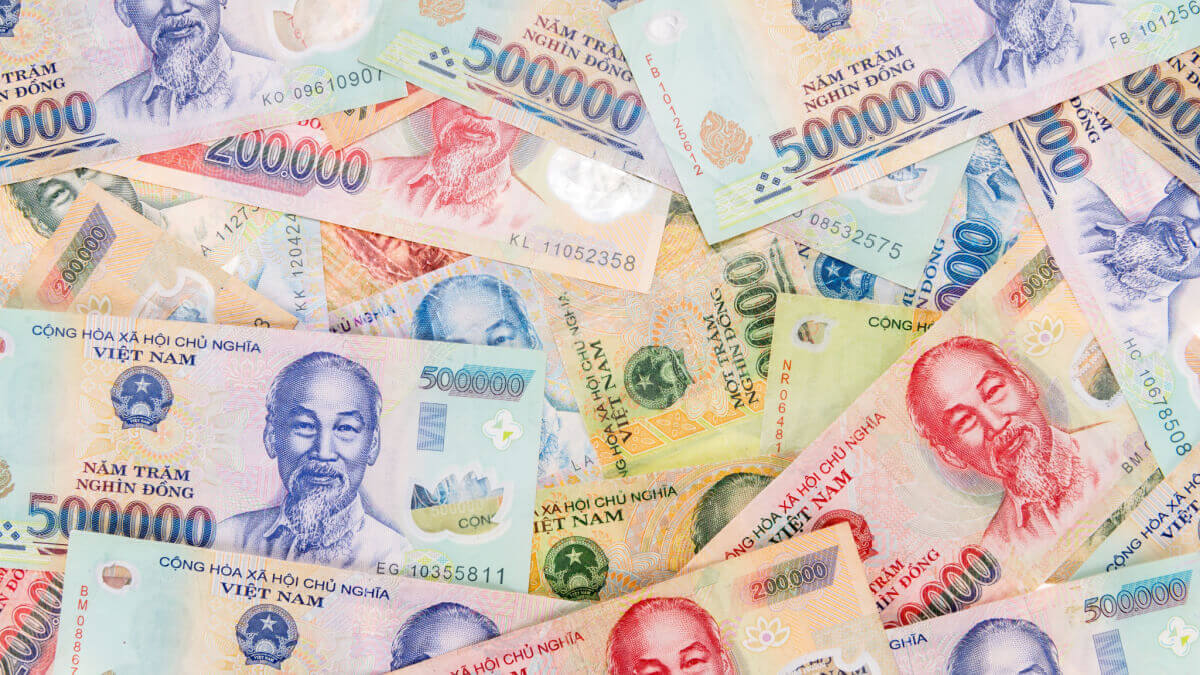
It starts as a two-week trip. Then a friend suggests staying through the next festival, or the coworking space turns out cheaper and better than anything back home, and suddenly the return flight gets pushed back. This is the in-between a lot of people find themselves in Vietnam — no longer quite a tourist, not yet committed to a real move. But somewhere in there, you let go of the idea that you’ll be leaving anytime soon; the country turns out too welcoming, too worth exploring, to rush out of. That’s when the practical questions start showing up, and one of the first is whether it’s time to open a Vietnamese bank account.
For a while, you might get by on cash and put up with the withdrawal fees. But the longer you stay, the more it pays to go through the paperwork — trading a bit of hassle now for lower fees and the ease of electronic banking.
Prerequisites
The single biggest factor in whether a bank will open an account for you is not nationality — it’s your residence status. Most major Vietnamese banks require a visa or residence permit valid for at least twelve months, and a standard tourist visa is generally not accepted. In practice, this means a work permit or Temporary Residence Card (TRC) will get you a same-day account at almost any branch, while showing up on a tourist e-visa will get you turned away at most of the big state-owned banks.
Beyond the visa question, banks typically ask for your original passport, the visa or TRC itself, a work permit where applicable, proof of a Vietnamese address such as a lease agreement, and an initial deposit. It’s worth bringing photocopies of everything, since branch staff will often want to keep copies on file. You’ll also need an active Vietnamese SIM card, since the OTP codes used to verify transactions are sent to a local number, and increasingly, a facial biometric scan registered through the bank’s mobile app, a requirement that has become standard since 2024. One detail that trips people up: Vietnamese banks are strict about signatures matching your passport exactly, and staff will have you re-sign forms until it does. If you’re a US citizen, expect to complete a FATCA disclosure form as part of the paperwork — this authorizes the bank to report your account to the IRS and is standard practice, not a red flag specific to you.
If your visa runs under twelve months, you’re not necessarily locked out — non-resident foreigners can generally still open a basic VND payment account, though they’re barred from opening interest-bearing savings accounts, and a handful of banks are more flexible with shorter-term visas than others (more on that below).
Is it worth it?
For a short stay, sticking with your foreign card and using ATMs might genuinely be simpler than opening a local account. But the math shifts fast once you’re here for months rather than weeks. Most Vietnamese ATMs charge foreign cardholders a fee somewhere between 20,000 and 55,000 VND per withdrawal, and since many banks cap withdrawals around 3 million VND per transaction, those fees add up quickly if you’re withdrawing regularly. On top of that, your home bank likely adds its own foreign-transaction fee on every withdrawal, so you’re often paying twice.
There’s also a common mistake worth flagging: when an ATM asks whether to charge you in your home currency or in VND, choosing your home currency lets the local bank set its own exchange rate, and that markup typically runs one to four percent above the market rate or higher — always decline the conversion and pay in VND.
A couple of banks make foreign-card withdrawals painless enough that you could delay opening an account for a while: VPBank and ACB are among the few that don’t charge foreign cardholders an ATM access fee, with VPBank allowing up to 10 million VND per transaction against ACB’s 3 million VND limit. Worth noting, though: TPBank used to be fee-free as well but introduced a fee of roughly 3.3% of the withdrawn amount in 2025, so “free” ATMs are worth double-checking rather than assuming from an older guide. For anyone staying beyond a few months, though, a local account still wins — not just on fees, but because salary, rent, and everyday transfers all assume you have one.
Picking a Bank
BIDV is the most accessible option if you’re on a shorter-stay e-visa: it’s known for opening accounts for holders of a 90-day e-visa without requiring a work permit, which most major banks won’t do.
Vietcombank is a solid default once you have a TRC or work permit: it’s widely regarded as the most reliable choice for receiving salary and handling international transfers.
Techcombank is worth considering if day-to-day banking matters most to you: it’s generally seen as having the best mobile app for everyday spending.
HSBC Vietnam and Standard Chartered Vietnam suit anyone who wants English-language service or multi-currency accounts: both offer stronger English support and multi-currency options, though they require higher minimum balances than local banks.
VPBank is the one to pair with a foreign card even after you open a local account, given its fee-free ATM withdrawals for foreign cardholders — handy for the odd occasion your local account runs low.
One quirk worth knowing before it catches you off guard: once the account is open, transactions require your name to be entered exactly as it appears on your TRC — spelling, spacing, word order, all of it. Drop a middle name or reorder it the way it’d read back home, and the transfer simply won’t go through.
The Bottom Line
In short, what you need is straightforward: a residence document valid for at least twelve months — a TRC or work permit — your passport, proof of a Vietnamese address, an initial deposit, a local SIM card, and patience for a quick biometric scan. Bring all of that to the right branch and the account itself takes minutes. But if any piece of it is still in flux — a visa renewal underway, a work permit pending — it’s worth getting a second opinion first; showing up short one document is an easy way to lose an afternoon.