


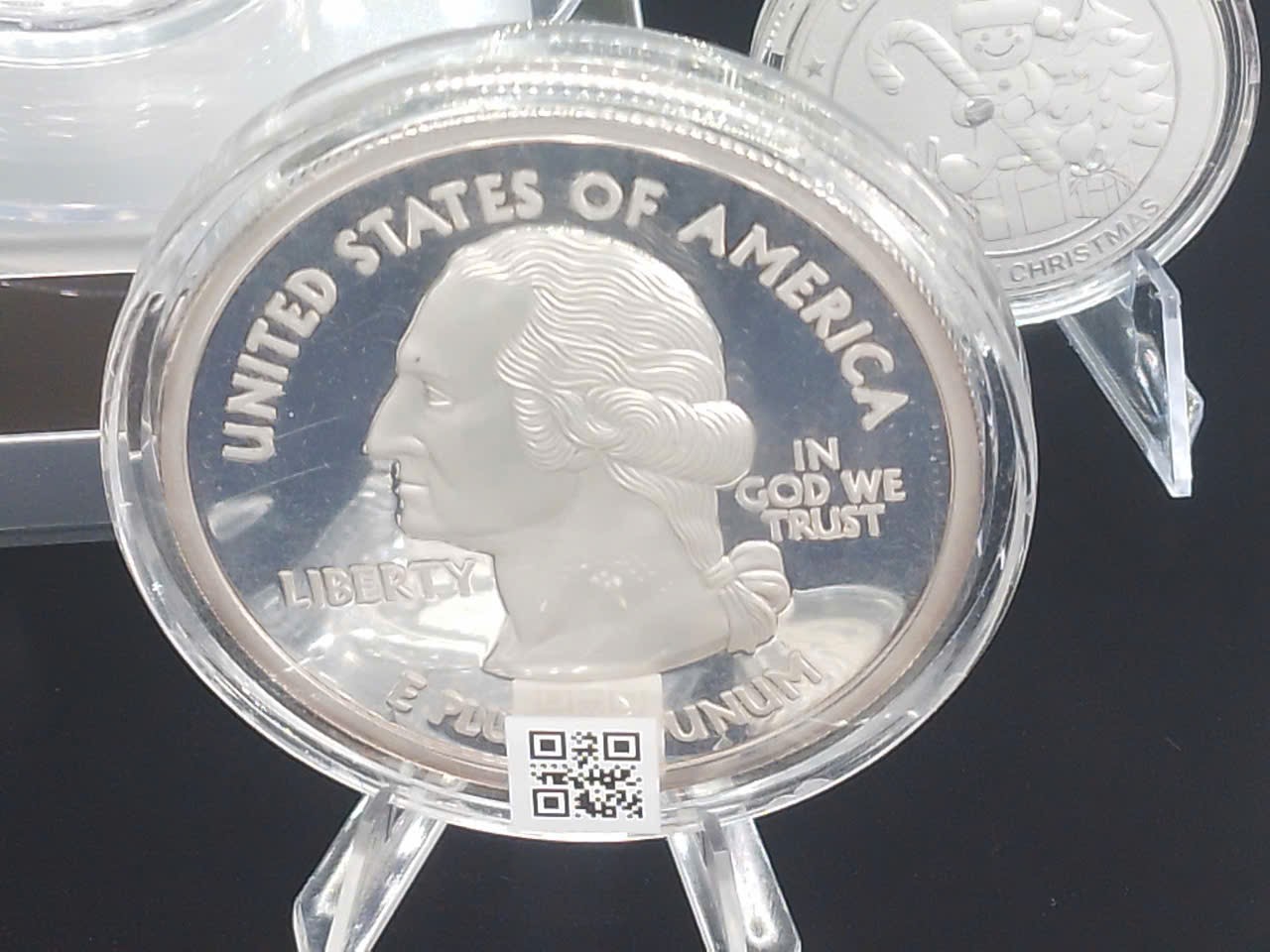
Vietnam is a gold country. Gold is a popular gift at weddings and birthdays, and it is how people save – at least until they have enough to invest in land. The evening news reports the domestic gold price the way other countries report the weather. Silver, by comparison, barely registers. It is worn as fashion jewellery, cast into ornaments and given to babies as protective bangles at the first-month ceremony or the first birthday. That neglect is precisely what makes it interesting.
Money that used to be silver
Strictly speaking, we live in a world without money. What circulates today is credit: fiat currencies are created as debt and backed by nothing except the promise of more of them. Money in the older sense – a thing of value in itself, owed by no one – has all but disappeared from daily life. Silver is that older money, and the world’s languages remember it. The word Vietnamese use for money in everyday speech – bạc – literally means silver. In French, argent means both silver and money; in much of the Spanish-speaking world, plata does the same; and in Hebrew, kesef has meant both since biblical times. Wherever silver circulated as coin, the metal and the money fused into one word. In Vietnam, that fusion is a legacy of the French Indochinese piastre, the piastre de commerce, introduced in 1885: a heavy trade coin of roughly 27 grams of .900 fine silver, minted to compete with the Mexican silver dollars that dominated Asian commerce. For decades, money in Vietnam was silver you could hold, bite and weigh. The piastre was known locally as the đồng bạc – the silver đồng – and while the silver disappeared long ago, the đồng remains the name of the currency today. Silver is not foreign to Vietnam. It is enshrined in the language.
Why hold metal at all
The case for holding any metal starts with what the alternatives do. Cash in đồng loses purchasing power steadily; bank interest rarely keeps up with the real cost of living, and the đồng has a long record of gradual depreciation against the dollar – which is itself depreciating against everything. Bitcoin solves some of this but replaces it with volatility, custody risk and dependence on exchanges, electricity and regulation. Gold works, and the Vietnamese know it, which is why they hold an estimated several hundred tonnes of it privately – but gold in Vietnam carries a problem of its own. The standard vehicle for gold savings here is the SJC bar – one tael of gold, stamped by the state-owned Saigon Jewelry Company, for over a decade the only company allowed to produce gold bars in Vietnam. The tael – lượng in Vietnamese, or cây colloquially – is the traditional unit of 37.5 grams, divided into ten chỉ of 3.75 grams each; domestic gold prices are quoted per tael, and smaller purchases are made in chỉ. That exclusivity made SJC bars the most trusted form of gold in the country, and the most overpriced: for years they traded at premiums of 10 to 15 per cent over the world price, a tax on trust paid to a state monopoly. The monopoly formally ended with Decree 232 in August 2025,i and the gap has been narrowing, but gold here is still expensive relative to gold elsewhere.
Silver carries no such baggage. It is not regulated the way gold bars are, there is no state monopoly to unwind, and the domestic price tracks the world price far more closely.
Into the rabbit hole
The case for gold rests on scarcity: roughly 200,000 tonnes above ground, so the standard figure goes, added to only slowly by expensive mining. But that figure is an estimate, not an audit. Official gold statistics are compiled from self-reported numbers, and central bank holdings are audited rarely if ever. Bix Weirii – a former banking insider turned market critic – has spent years arguing that far more gold exists than officially acknowledged. His ‘Road to Roota’ theory reads a 1980s Federal Reserve educational comic, Wishes and Rainbows, as a coded roadmap: a character named Roota finds long-hidden gold in ‘Cobblestone Canyon’, which Weir takes as an allusion to enormous undisclosed deposits – he points to the Grand Canyon – held back to enable an eventual return to gold-backed money. Take the comic-book exegesis as you like, but if there is substantially more gold in the world than assumed, gold’s scarcity premium is softer than advertised. Silver faces the opposite situation: consumed industrially in solar panels and electronics and rarely recycled, its above-ground stocks have been shrinking for decades. Which leads to Weir’s larger argument: both metals markets are managed, with prices held down through paper contracts to protect the credit system. Whether or not you follow him all the way down, the direction matters. In a fair market – a free one – a metal that is consumed rather than hoarded and scarcer every year would be priced very differently. Silver, on this reading, is not just a hedge. It is a stake in an economy built on more than unsustainable credit and, frankly, fraud.
The ratio
How mispriced is silver, then? The oldest yardstick is the gold-to-silver ratio: how many ounces of silver it takes to buy one ounce of gold. Through most of monetary history, when both metals actually circulated as money, the ratio sat near 15:1. That roughly matches how the two metals occur in the earth’s crust, and mining tells the same story: in recent years the world has produced around 3,300 tonnes of gold annually against some 25,000 tonnes of silver – about seven ounces of silver for every ounce of gold.iii In August 2026, with gold above $4,300 and silver in the $60s, the ratio stands in the mid-to-high 60s – down from over 100 in 2020, but still four times the historical monetary norm. If you believe the metals are drifting back towards their monetary relationship, silver is the cheap half of the pair. Every compression of the ratio means silver outperforming gold, which is exactly what the past two years have delivered.
Divesting, not investing
Here is the reframe worth sitting with. You do not ‘invest’ in silver. An investment is supposed to produce something – a dividend, a yield, a business. A silver bar produces nothing, and that is the point. Buying silver is better understood as divesting: stepping out of a financial system built on currencies that are designed to lose value and assets whose prices depend on that same expanding credit. You are not making a bet. You are declining one, and holding the form of money that predates the system entirely.
Where to buy it
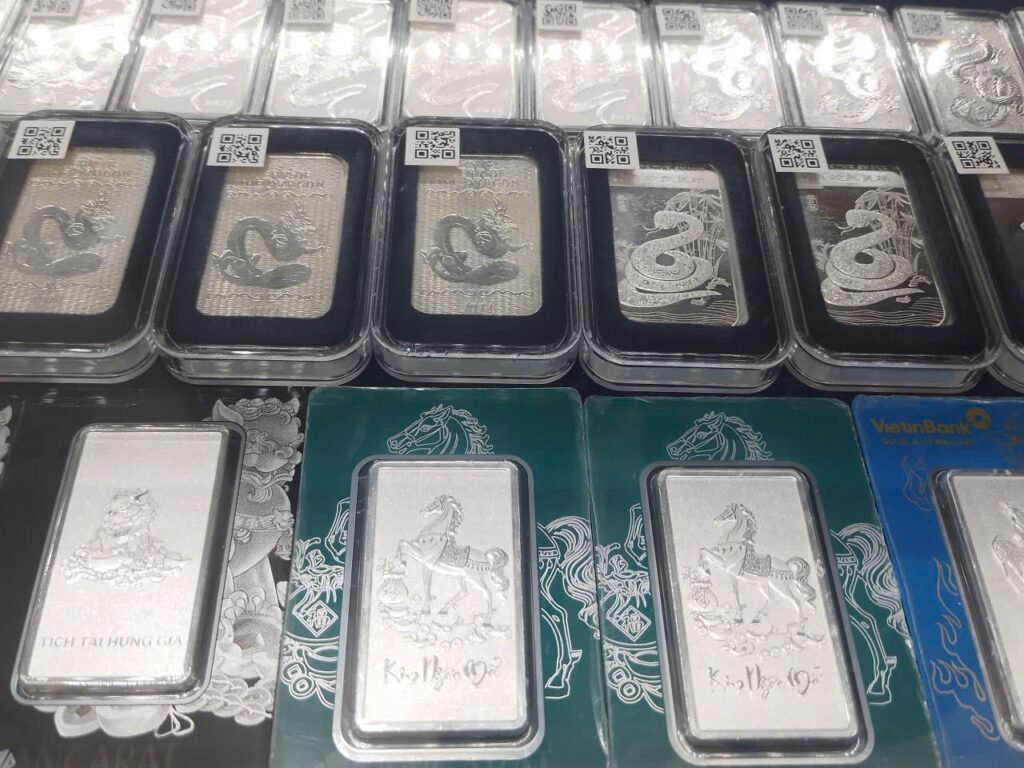
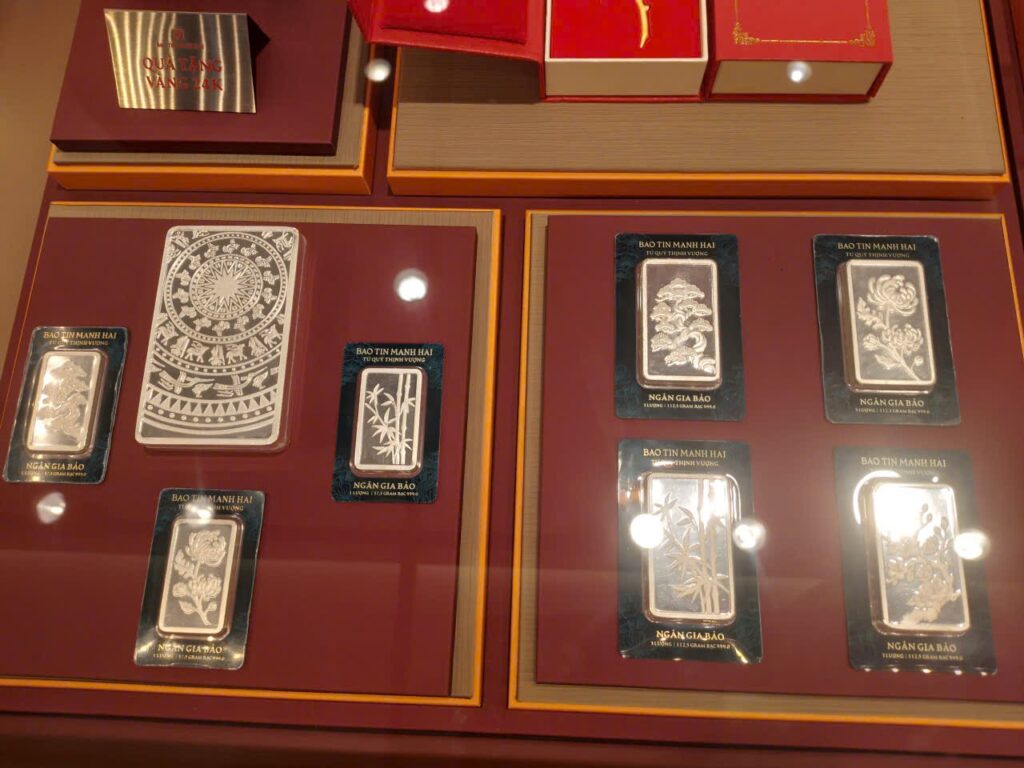
A quiet retail silver market has grown up in Vietnam. Phú Quý in Hanoi, Ancarat and Sacombank’s SBJ all sell investment-grade silver bars with published daily buy and sell prices, quoted per ounce and per kilogram rather than in the tael and chỉ of the gold trade. The spreads are wider than in Western bullion markets but reasonable, and – unlike gold bars until recently – you can walk in and buy without ceremony.
One distinction matters: bullion versus jewellery. Silver jewellery, abundant in every town, carries fabrication markups of 30 per cent or more and often uneven purity; you are paying for craft, not metal. Bars and rounds from the dealers above are priced close to melt value and are what you sell back at a fair price. Buy jewellery because it is beautiful. Buy bars because they are money.
Before you head to the shop
A final note: none of this is financial advice. Whether to buy – and how much – is your decision alone, and it depends on your circumstances. Silver is bulky to store and its buyback spreads are wider than gold’s, so it suits patient holders rather than traders. But as a way to move some savings out of a depreciating currency without paying Vietnam’s gold premium, silver bars from an established dealer are one of the simpler options available – in a country that, whatever the gold shops suggest, still calls its money silver.
i Decree 232/2025/ND-CP, issued 26 August 2025, repealed the state monopoly on gold bar production established under Decree 24/2012/ND-CP. See Vietnam Law Magazine.
ii Bix Weir publishes at www.roadtoroota.com and as @RoadtoRoota on YouTube.
iii Mine production figures: USGS, Mineral Commodity Summaries 2025 – Gold (c. 3,300 tonnes in 2024) and The Silver Institute, Mine Production (c. 820 million ounces, or roughly 25,500 tonnes, in 2024).